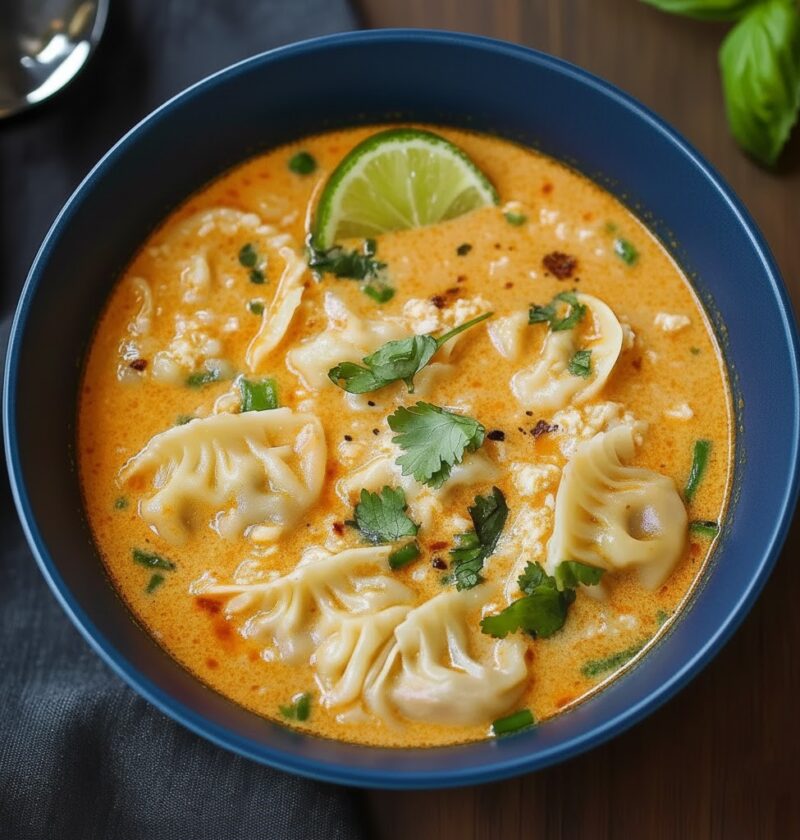
Thai Coconut Curry Dumpling Soup is the perfect bowl of comfort, rich with creamy coconut and aromatic spices. I like to make it when I want something warm, satisfying, and full of flavor without being too heavy.
The dumplings soak up the curry beautifully, making every bite soft and flavorful. I enjoy it for lunch, a light dinner, or anytime I want a cozy meal that feels special.
This soup is also flexible, letting you add your favorite vegetables or protein. A few fresh herbs and a squeeze of lime brighten it up, turning a simple soup into something amazing.
Here’s a quick glance at the recipe information before we start cooking
| Servings | Calories | Protein | Carbs | Fat | Gluten Free | Vegan Option | Difficulty |
|---|---|---|---|---|---|---|---|
| 4 | 350 kcal | 12 g | 28 g | 18 g | Yes | Yes* | Easy |
*Use plant-based dumplings to make it fully vegan
Why You’ll Love This Recipe
This soup is creamy, spicy, and satisfying all at once. The dumplings absorb the curry, giving a soft, chewy texture that is irresistible in every spoonful.
The combination of coconut milk, red curry, and fresh herbs makes the flavor complex but comforting. It’s quick to cook yet tastes like it has been simmering for hours, making it perfect for busy days.
The soup is also customizable with your favorite vegetables or proteins. Each bowl feels cozy and indulgent, perfect for lunch, dinner, or anytime you want something flavorful and heartwarming.
Ingredients to Make Thai Coconut Curry Dumpling Soup
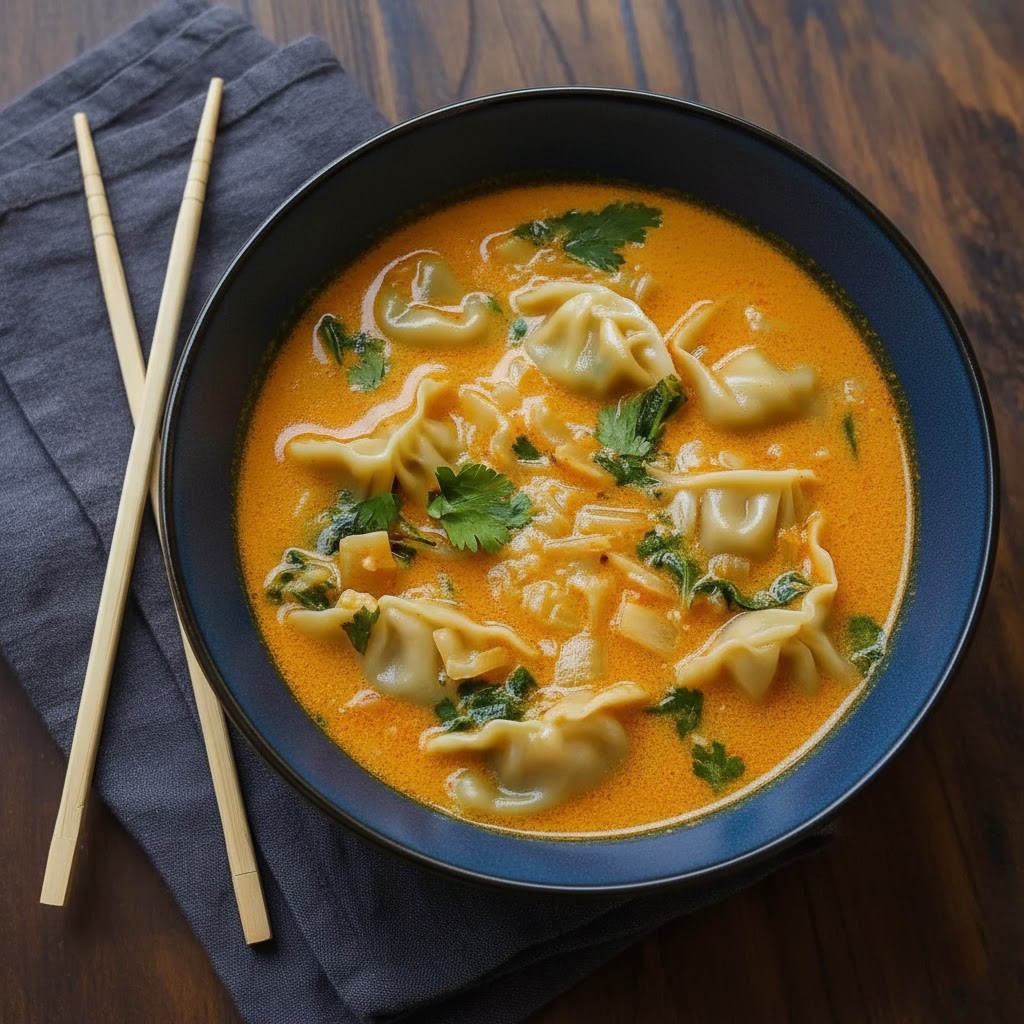
To make this soup, you need a few key ingredients that combine to give it a rich, aromatic, and comforting flavor. Each ingredient plays a special role in creating this creamy, flavorful dish.
Dumplings (8–10 pieces) – Soft dumplings are essential, whether you use store-bought or homemade. They absorb the coconut curry beautifully, giving a tender and satisfying texture in every bite.
Coconut Milk (1 can, 400 ml) – Coconut milk creates a creamy base for the soup. Its natural sweetness balances the heat from the red curry paste perfectly.
Red Curry Paste (2 tablespoons) – Red curry paste provides the bold, spicy foundation of the soup. Made with red chilies, garlic, and lemongrass, it gives an authentic Thai flavor.
Vegetable or Chicken Broth (2 cups) – Broth adds depth and richness to the soup. Homemade broth enhances the overall flavor and makes the soup taste more complex.
Ginger (1-inch piece, grated) – Fresh ginger adds a subtle warmth and fragrant aroma. It pairs wonderfully with the coconut and curry, enhancing the soup’s overall flavor.
Garlic (3 cloves, minced) – Garlic gives savory depth and aroma to the soup. It forms a flavorful base when cooked with ginger and lemongrass.
Lemongrass (1 stalk, crushed) – Lemongrass adds a fresh, citrusy note that brightens the curry. It is a key ingredient for authentic Thai flavor.
Soy Sauce or Tamari (2 tablespoons) – Soy sauce adds saltiness and umami, while tamari is perfect for a gluten-free option. It helps balance the richness of the coconut milk.
Brown Sugar (1 teaspoon) – Brown sugar adds subtle sweetness to the curry. It balances the spiciness and brings harmony to the soup.
Vegetables (1 cup, mixed: bell peppers, carrots, baby corn, etc.) – Vegetables provide color, texture, and nutrition. You can choose your favorites or whatever is in season for variety.
Fresh Herbs (cilantro or Thai basil) – Fresh herbs add brightness and fragrance. They make the soup visually appealing and aromatic.
Lime Juice (1 tablespoon) – Lime juice adds acidity and lifts all the flavors. It balances the creamy richness of the coconut milk and completes the dish.
Steps to Make Thai Coconut Curry Dumpling Soup
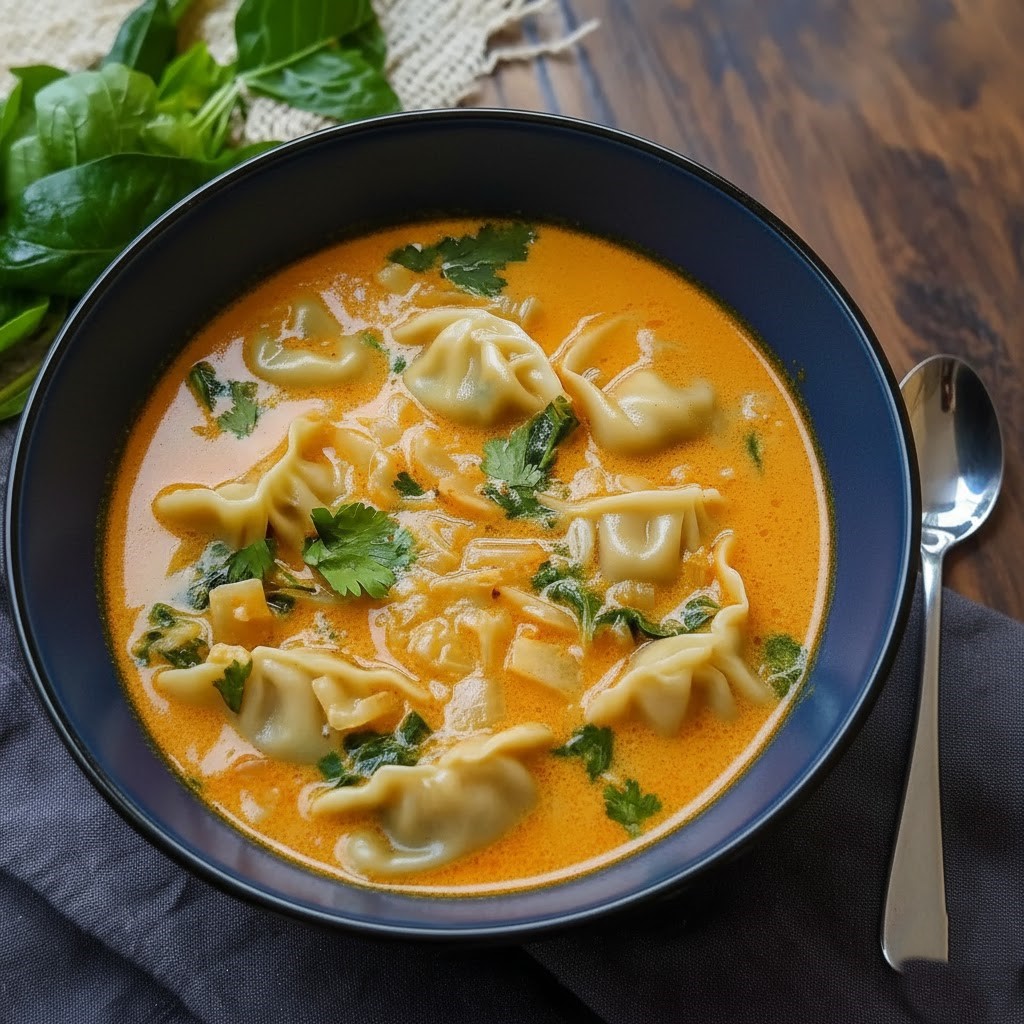
Making this soup is simple but each step builds layers of flavor. Follow these steps carefully for a rich, aromatic, and comforting bowl.
Step 1: Prepare the Aromatics
Heat a tablespoon of oil in a large pot over medium heat. Add minced garlic, grated ginger, and crushed lemongrass, and sauté for 2–3 minutes until fragrant.
The aromatics release essential oils that form the base of the soup. Stir continuously to prevent burning and ensure even flavor distribution.
Step 2: Add Curry Paste
Add red curry paste to the aromatics and cook for 1–2 minutes while stirring constantly.
Cooking the paste enhances its flavors and reduces any raw chili taste. This ensures the soup has a rich, deep curry flavor from the start.
Step 3: Add Coconut Milk and Broth
Pour in coconut milk and vegetable or chicken broth, stirring gently to combine. Bring the mixture to a gentle simmer over medium heat.
The coconut milk creates a creamy texture while the broth adds depth. Let the soup heat gradually to meld the flavors without curdling the coconut milk.
Step 4: Season the Soup
Add soy sauce or tamari, brown sugar, and a pinch of salt. Stir well and taste to adjust seasoning according to your preference.
Balancing sweet, salty, and savory flavors at this stage is crucial. It ensures that the dumplings and vegetables absorb the curry perfectly.
Step 5: Cook the Dumplings
Gently add dumplings to the simmering soup, one at a time. Cook until they float and are fully cooked through, following package instructions if needed.
Do not overcrowd the pot to ensure even cooking. The dumplings will soak up some of the curry, becoming tender and flavorful.
Step 6: Add Vegetables
Add vegetables such as bell peppers, carrots, or baby corn. Simmer for 3–5 minutes until they are tender but still slightly crisp.
Adding vegetables at the end keeps them vibrant, crunchy, and full of nutrients. Overcooking will make them soggy and less appealing visually.
Step 7: Finish with Herbs and Lime
Turn off the heat and stir in fresh herbs like cilantro or Thai basil. Add lime juice to brighten the flavors and give a fresh, zesty finish.
This final step enhances aroma, taste, and presentation. The soup is now ready to serve hot, flavorful, and comforting.
Serving Suggestions
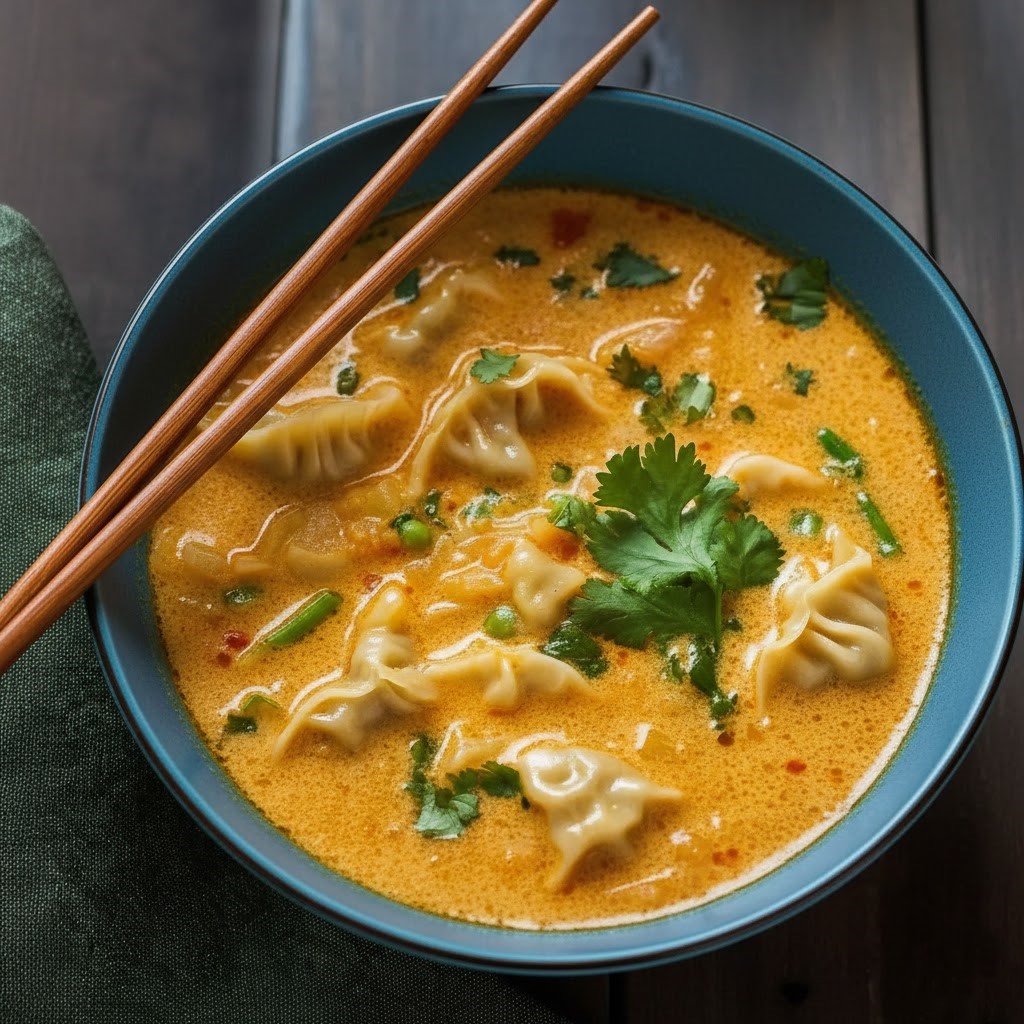
Thai Coconut Curry Dumpling Soup is delicious on its own, but serving it with sides can elevate the meal. I often pair it with jasmine rice or a slice of crusty bread to soak up the flavorful curry.
Adding fresh garnishes makes the dish even more appealing. Chopped cilantro, Thai basil, or thin slices of red chili give the soup a vibrant look and extra flavor.
A squeeze of lime on the side brightens the creamy soup and balances its richness. It also adds a refreshing, zesty touch that enhances every spoonful.
You can serve a light side salad with cucumber, carrots, or fresh herbs. The crisp vegetables provide a contrast to the soft dumplings and creamy curry, making each bite more enjoyable.
For a heartier meal, shredded chicken, tofu, or shrimp are excellent additions. They make the soup more filling while keeping it healthy and nutritious.
Serving in deep bowls helps keep the soup warm longer. It also makes each portion look generous and comforting, perfect for cozy family meals or casual dinner parties.
Meal Prep Tips: Can We Make Thai Coconut Curry Dumpling Soup in Advance?
Yes, this soup can be prepared ahead with some simple adjustments. I usually make the curry base first and store it in the fridge, adding dumplings and vegetables when ready to serve.
Dumplings can be cooked ahead and stored uncooked or partially cooked. When reheating, just simmer them in the curry until fully cooked and tender.
Vegetables should be added fresh or just before reheating. Adding them too early can cause them to become soft and lose their vibrant colors.
The soup base can be stored in the fridge for up to three days. When ready to serve, heat gently on the stovetop to preserve the creamy texture of the coconut milk.
For make-ahead portions, keep the curry base and dumplings separate. This prevents dumplings from absorbing too much liquid and becoming overly soft.
Freezing is possible for the curry base, but vegetables and dumplings are best added fresh. Thaw the base overnight and add fresh ingredients for the best texture and flavor.
Meal prepping this way saves time while allowing you to enjoy fresh, flavorful soup any day of the week. It is ideal for busy weekdays or batch cooking for multiple meals.
Cooking Tips
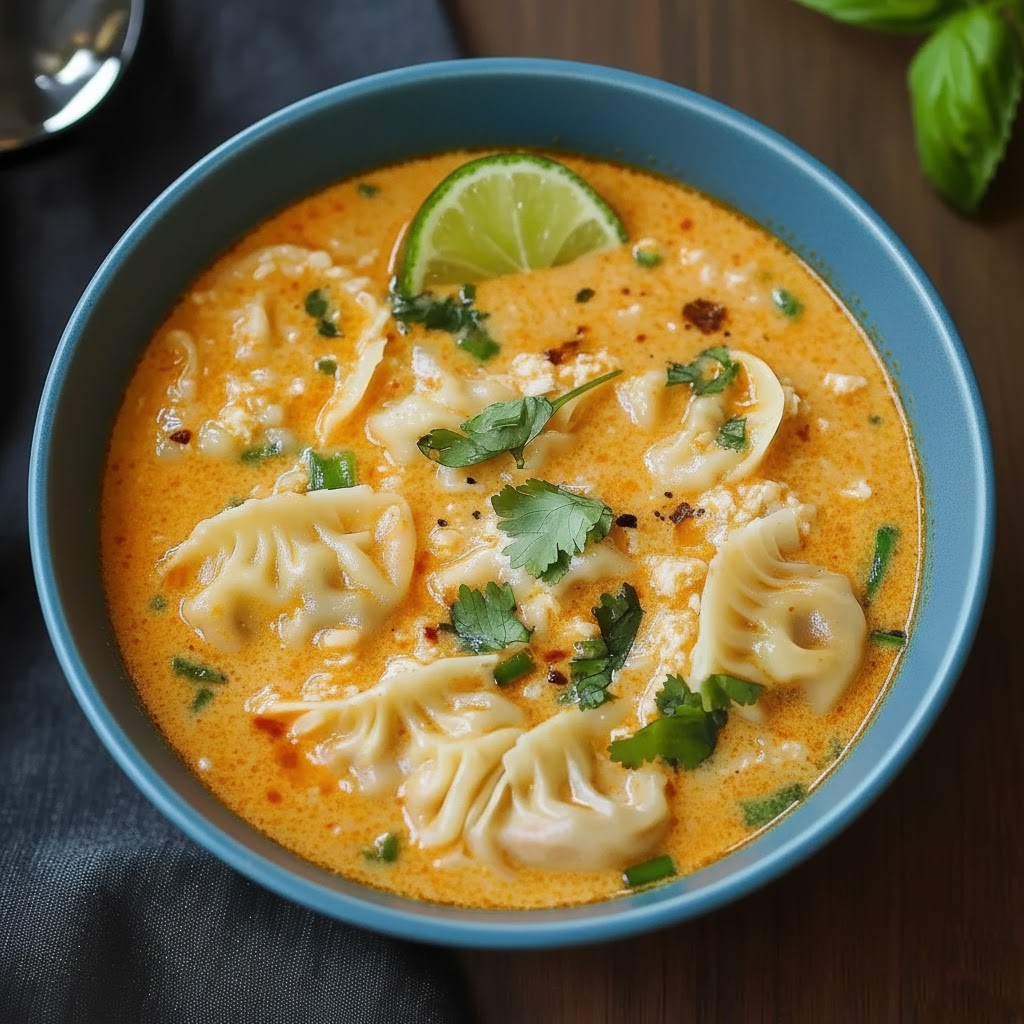
Using fresh ingredients makes a noticeable difference in flavor. Fresh ginger, lemongrass, and herbs provide an aromatic lift that pre-minced or dried alternatives cannot match.
Avoid overcrowding the pot when cooking dumplings. This ensures even cooking and prevents them from sticking together or breaking apart.
Simmer the soup gently instead of boiling. Rapid boiling can cause the coconut milk to separate, affecting the creamy texture.
Season the soup before adding dumplings and vegetables. Balancing sweet, salty, and acidic flavors at this stage ensures every bite tastes perfect.
Include a variety of vegetables for different textures. Bell peppers, baby corn, carrots, and zucchini add crunch and interest to each spoonful.
Garnishing with fresh herbs and lime juice at the end makes a huge difference. It adds aroma, flavor, and visual appeal that elevates the dish.
Adjust spice levels according to preference. Extra red curry paste or fresh chili slices can make the soup hotter, while coconut milk will mellow it for milder tastes.
Variations of Thai Coconut Curry Dumpling Soup
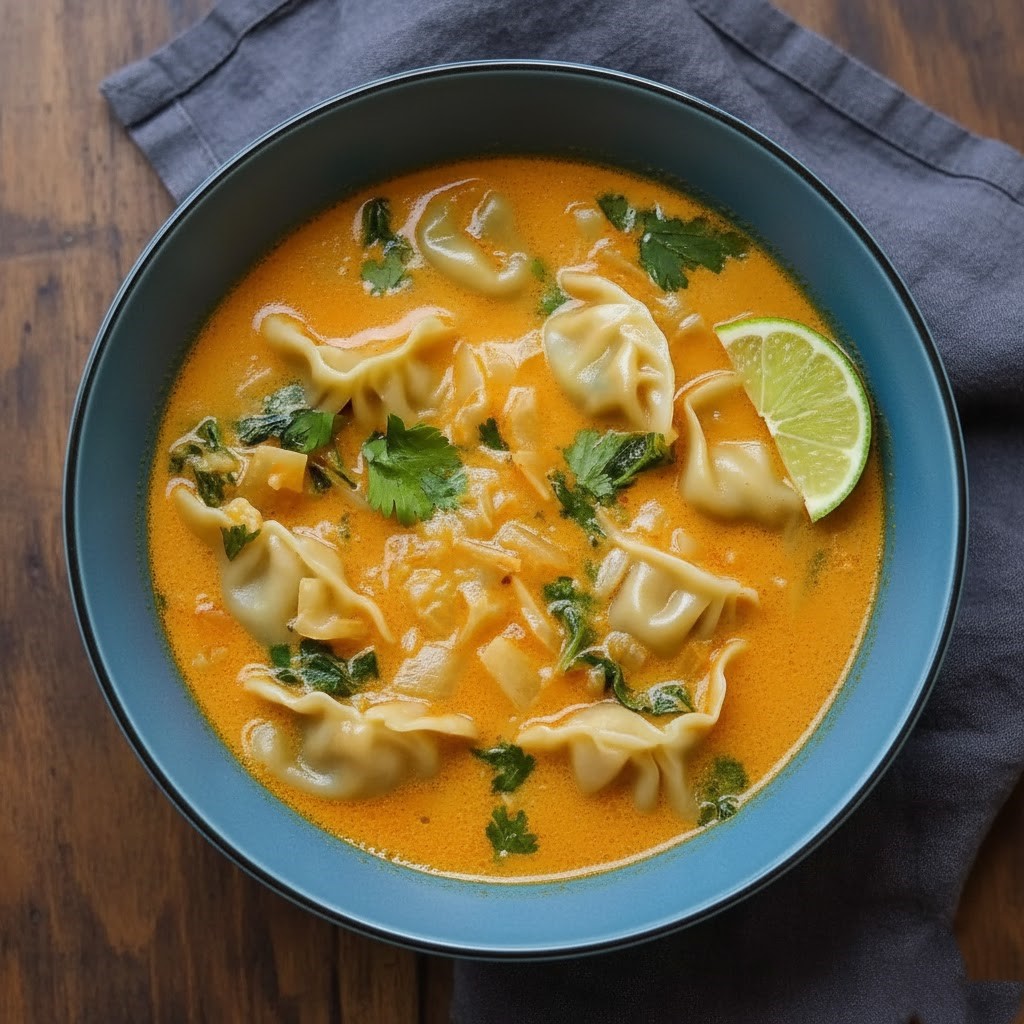
This soup is very flexible and can be customized in many ways. You can substitute dumplings with shrimp, tofu, or chicken meatballs for different proteins.
Vegetables can be varied depending on the season. Zucchini, snap peas, mushrooms, or spinach all work well and add new textures and colors.
For a vegan version, simply use plant-based dumplings and vegetable broth. Coconut milk ensures the soup remains creamy and flavorful without animal products.
To make a lighter version, reduce the coconut milk slightly and increase the broth. This creates a thinner, broth-style soup while maintaining flavor.
For a richer, creamier variation, add a splash of coconut cream or Greek yogurt before serving. It enhances the texture and creates a luxurious mouthfeel.
Experimenting with herbs can also change the flavor profile. Kaffir lime leaves, fresh basil, or mint give a unique twist to the classic recipe.
You can adjust the heat according to taste. More chili paste or fresh chili slices will increase spiciness, while coconut milk keeps it smooth and balanced.
Storage Instructions
Store leftover soup in an airtight container in the fridge for up to three days. Proper storage preserves flavor and prevents the dumplings from becoming overly soft.
Keep dumplings and vegetables slightly separate if possible. This helps maintain texture and prevents sogginess over time.
The curry base can be frozen in freezer-safe containers for up to two months. Leave some space for expansion and thaw overnight in the fridge before reheating.
Avoid freezing dumplings or vegetables in the soup. They tend to lose their texture and become mushy when thawed and reheated.
Cool the soup to room temperature before refrigerating or freezing. This prevents condensation, which can affect both texture and flavor.
Label containers with the date to ensure safe consumption. Following these steps helps maintain the fresh taste and creamy consistency of the soup.
Can We Reheat Thai Coconut Curry Dumpling Soup
Reheating this soup is simple but should be done gently. Use a stovetop over low to medium heat, stirring occasionally to prevent the coconut milk from separating.
Avoid long microwave heating, as it can heat unevenly and affect the texture. Add a splash of broth if the soup has thickened during storage.
If dumplings were cooked separately, add them at the end and heat just until warmed through. This keeps them soft and prevents overcooking.
Fresh vegetables can also be added at this stage or lightly steamed before adding. This maintains their crispness and prevents them from becoming mushy.
Finish with fresh herbs and a squeeze of lime for brightness. This restores the aroma and flavor, making the reheated soup taste freshly prepared.
Recipe FAQs
Can I adjust the spice level? Yes, simply add more or less red curry paste. Reduce it for mild flavor and add extra fresh chili for a spicier version.
Can I use frozen dumplings? Yes, frozen dumplings cook perfectly in the simmering soup. Avoid thawing them first to prevent sticking or breaking.
Is this soup vegan-friendly? Yes, use plant-based dumplings and vegetable broth. Coconut milk provides creaminess, so the soup remains rich and satisfying.
Can I prepare the soup ahead of time? Yes, the curry base can be made in advance and dumplings added later. Vegetables are best added fresh or just before reheating.
Can I freeze the soup? The curry base freezes well, but dumplings and vegetables are best added fresh. Thaw the base overnight and heat gently, then add fresh ingredients.
Can I add proteins like chicken or shrimp? Yes, both cook beautifully in the soup. Adjust cooking times for different proteins to ensure they are fully done.
Which vegetables work best? Bell peppers, carrots, baby corn, snap peas, zucchini, or spinach are excellent choices. Use fresh, crisp vegetables for the best texture and flavor.
Conclusion
Thai Coconut Curry Dumpling Soup is a warm, comforting, and flavorful dish perfect for any day. The combination of creamy coconut milk, aromatic curry, tender dumplings, and fresh vegetables makes every bite satisfying.
The recipe is versatile, allowing customization with vegetables, proteins, or spice levels. It works for lunch, dinner, or special occasions and is always a crowd-pleaser.
It is easy to prepare, can be made ahead, and reheats well. Fresh herbs and lime juice at the end enhance aroma, flavor, and presentation, making it feel fresh every time.
Every spoonful balances creamy, spicy, sweet, and savory flavors. The soup comforts, nourishes, and delights, becoming a go-to dish for cozy nights or family dinners.
Simple ingredients come together to create a restaurant-quality dish at home. Once you try it, it becomes a staple for anyone who loves bold, comforting, and aromatic flavors.
This soup shows that healthy, delicious meals don’t need to be complicated. With a little prep and care, you can enjoy a bowl of Thai Coconut Curry Dumpling Soup that’s flavorful, satisfying, and heartwarming every time.