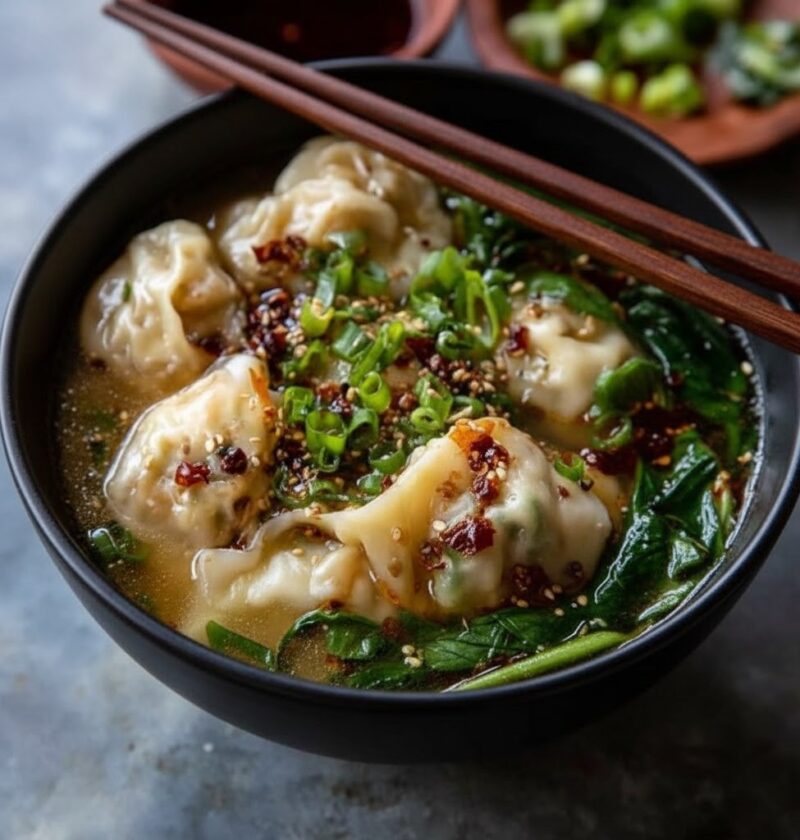
Wonton soup is one of those dishes that feels comforting no matter the time of day. I often make it when I want something warm, soothing, and light without feeling heavy.
This soup is simple, yet every spoonful feels special because of the delicate wontons floating in a flavorful broth. I like preparing it on quiet evenings, chilly days, or when I need a calm and nourishing meal.
Wonton soup works well as a light lunch, a cozy dinner, or even a gentle meal when you’re not feeling your best. It fills you up while still feeling clean, balanced, and easy on the stomach.
Before we move forward, here’s a quick overview of what this recipe offers so you know exactly what you’re making.
| Recipe Detail | Information |
|---|---|
| Servings | 4 bowls |
| Calories | ~320 per serving |
| Protein | ~18g |
| Carbohydrates | ~32g |
| Fat | ~12g |
| Gluten-Free | No |
| Dairy-Free | Yes |
| Vegan | No |
| Cuisine | Asian-inspired |
| Best For | Lunch, dinner, light meals |
Why You’ll Love This Recipe
This wonton soup recipe is simple enough for beginners but still feels special and homemade. I’ve explained everything clearly so the process feels relaxed and enjoyable.
The broth is light yet full of flavor, making it comforting without being oily or heavy. Each wonton stays tender, juicy, and perfectly cooked.
You can easily customize the filling, broth strength, or vegetables based on what you like. This makes it a flexible recipe you can return to again and again.
It’s also a great option for both busy weekdays and slow weekends. Once you try it, it becomes a go-to comfort dish.
Ingredients to Make Wonton Soup
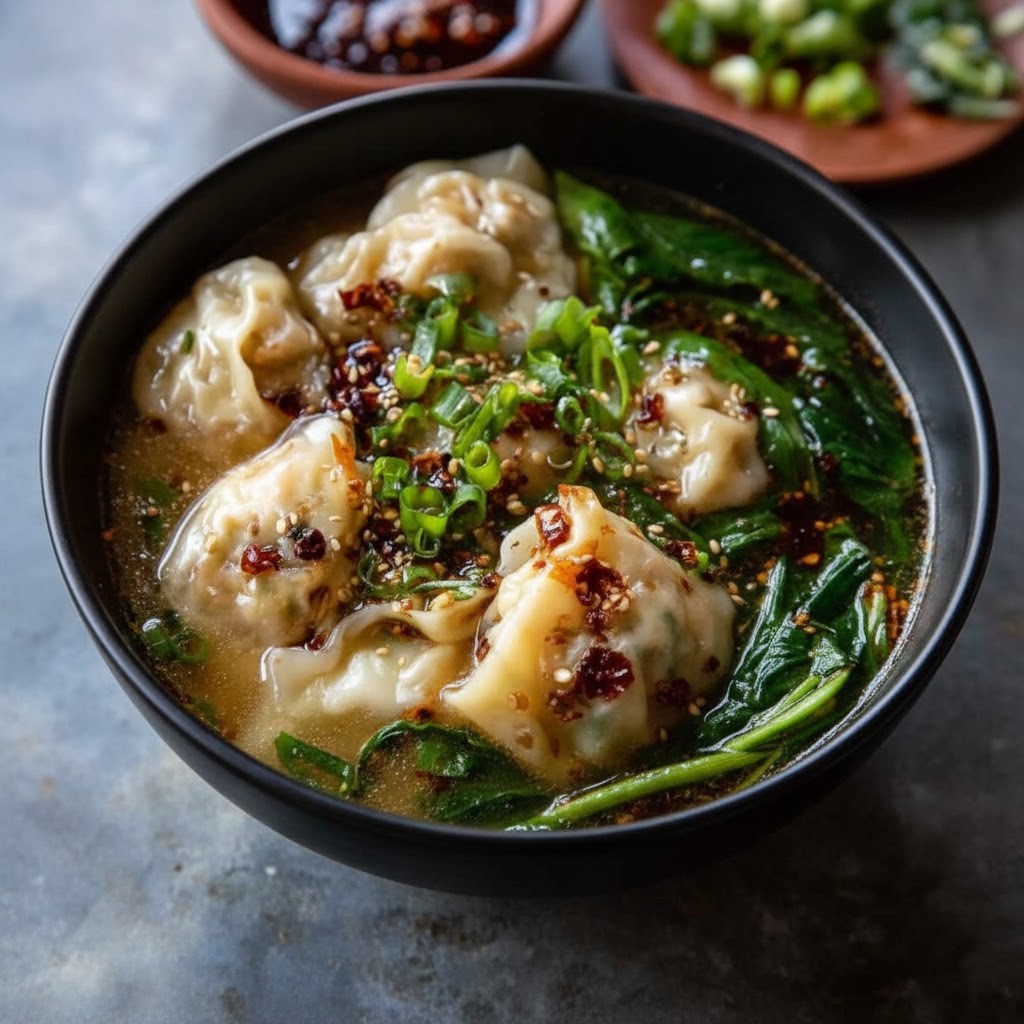
This wonton soup recipe uses a short list of ingredients that come together beautifully.
Each component plays a role in creating a balanced soup with tender wontons and a savory broth.
For the Broth
- Chicken broth – 6 cups
Use high-quality chicken broth to give the soup a rich, clear, and flavorful base. The broth forms the heart of the soup and carries all other flavors beautifully. - Garlic – 3 cloves, minced
Garlic adds warmth and depth to the broth without overpowering the delicate wontons. It blends perfectly with ginger and green onions. - Fresh ginger – 1 tablespoon, grated
Ginger contributes subtle heat and a fresh aroma that balances the savory flavors of the broth. It makes the soup comforting and fragrant. - Green onions – 2 stalks, chopped (white and green parts separated)
The white parts flavor the broth, while the green parts are ideal for garnishing. They add freshness and mild sharpness. - Sesame oil – 1 tablespoon
A touch of sesame oil gives the broth a nutty aroma and rounds out the flavors. It should be added early to infuse the soup. - Soy sauce – 1 tablespoon
Soy sauce enhances the umami of the soup and slightly deepens its color. It complements the natural sweetness of the broth. - Salt and white pepper – to taste
Season slowly and adjust according to preference. White pepper adds gentle heat without overpowering the soup.
For the Wontons and Vegetables
- Mini frozen pork and prawn wontons – 20 to 24 pieces
These cook quickly in the broth and remain tender and juicy. Frozen wontons are convenient while still giving excellent flavor. - Bok choy – 2 cups, chopped
Bok choy adds freshness, crunch, and vibrant green color. It balances the softness of the wontons with a light, leafy texture. - Shiitake mushrooms – 1 cup, sliced
Mushrooms provide umami and a slightly meaty texture. They enhance the broth’s flavor and make the soup more satisfying. - Spinach and carrots – 1 cup, julienned
Spinach adds softness and mild flavor, while carrots provide color and a subtle natural sweetness. These vegetables brighten the soup visually and nutritionally. - Chili oil or sambal oelek – 2 tablespoons (adjust to taste)
Adds a gentle heat to the soup. You can increase or decrease according to your spice preference.
For Garnish
- Extra green onions – sliced thin
Sprinkle over the soup for a fresh, crunchy bite. They enhance color and aroma. - Drizzle of sesame oil
Added just before serving, it enhances fragrance and balances flavors. - Extra chili oil
Optional for those who like a spicier kick.
Steps to Make Wonton Soup
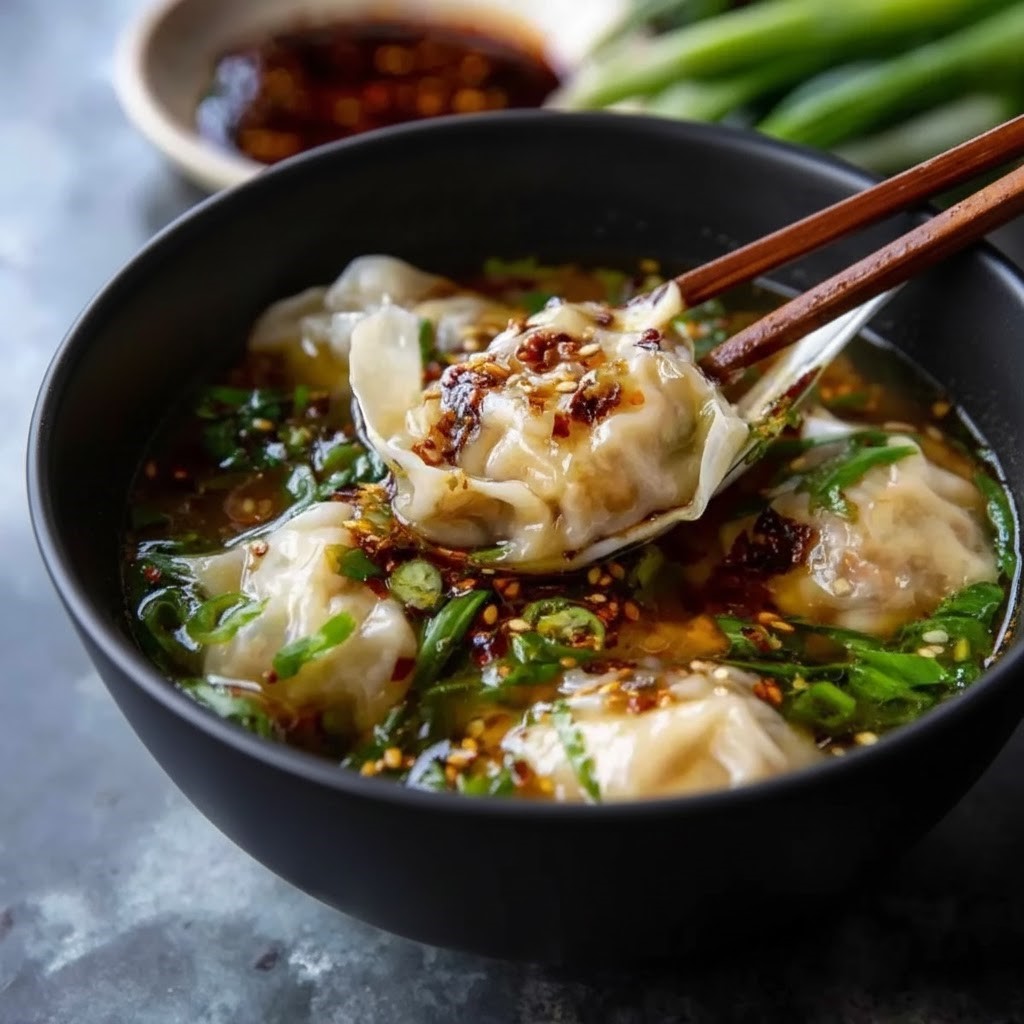
This recipe is easy to follow if you work step by step. Small details like simmering gently and adding vegetables at the right time make a big difference.
Step 1: Prepare the Broth
In a large pot, combine the chicken broth, minced garlic, grated ginger, and the white parts of the green onions. Add sesame oil, soy sauce, and a pinch of salt and white pepper.
Bring the broth to a gentle simmer to allow flavors to blend. The soup should start smelling fragrant and inviting.
Step 2: Cook the Wontons
Add the frozen mini pork and prawn wontons carefully to the simmering broth. Stir gently to prevent sticking and cook until they float to the top, about 4–6 minutes.
Check one wonton by cutting it open to ensure it is fully cooked. The filling should be hot and juicy.
Step 3: Add the Vegetables
Add chopped bok choy, sliced shiitake mushrooms, spinach, and julienned carrots to the pot. Cook for 2–3 minutes until the greens wilt but remain bright and the mushrooms are tender.
Vegetables should retain a slight crunch to contrast with the soft wontons. Avoid overcooking to preserve color and texture.
Step 4: Adjust the Flavor
Taste the soup and add extra salt, white pepper, or soy sauce if needed. Stir in chili oil or sambal oelek according to your spice preference and let it simmer for another minute.
This step ensures the broth is well-seasoned and the spice is balanced with the sweet and savory flavors.
Step 5: Serve and Garnish
Ladle the soup into bowls, making sure each serving has plenty of wontons and vegetables. Sprinkle with green onions, drizzle sesame oil on top, and add extra chili oil if desired.
Serve immediately while hot to enjoy tender wontons, vibrant vegetables, and aromatic broth. This soup is best enjoyed fresh.
Substitutes
If you don’t have chicken broth, vegetable broth or homemade bone broth works well. Vegetable broth keeps it lighter and makes it vegetarian-friendly.
For the wontons, you can swap pork and prawn for chicken, shrimp, or even tofu-filled wontons. This allows flexibility for dietary preferences while keeping the soup tasty.
Bok choy can be replaced with napa cabbage, baby spinach, or kale. Any leafy green will work as long as it wilts gently in the broth.
Shiitake mushrooms can be substituted with cremini, button mushrooms, or oyster mushrooms. These alternatives add umami and texture without changing the soup flavor significantly.
Sesame oil can be replaced with a mild olive oil or avocado oil. While it slightly changes the aroma, it still gives a gentle richness to the broth.
Chili oil or sambal oelek can be swapped with sriracha, crushed red pepper, or even a few drops of hot sauce. Adjust the amount to control the spice level according to your taste.
Soy sauce can be replaced with tamari for a gluten-free option. This keeps the umami and salty flavor consistent without using traditional soy sauce.
Serving Suggestions
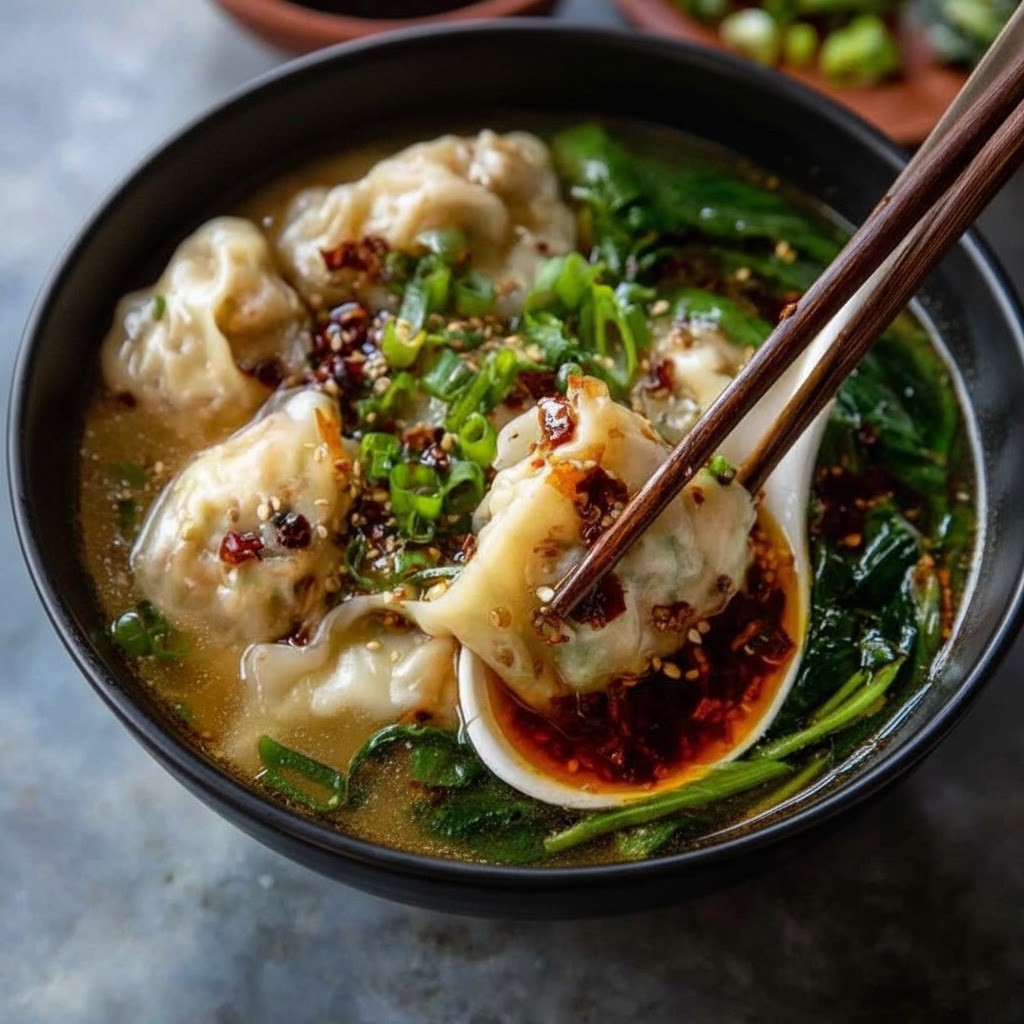
Wonton soup is best served hot and fresh straight from the pot. The warmth enhances the aroma of the broth and keeps the wontons tender and juicy.
I like serving it in deep bowls so the broth stays warm longer. This also allows the wontons and greens to sit comfortably without overcrowding.
You can serve wonton soup on its own for a light meal. It feels satisfying without needing anything extra on the side.
For a fuller meal, pair it with steamed rice or simple vegetable fried rice. The mild soup balances richer side dishes nicely.
It also works well as a starter before a larger Asian-inspired dinner. The light broth prepares the appetite without filling you up too quickly.
A sprinkle of chopped green onions or a few drops of sesame oil can be added before serving. These small touches boost aroma and visual appeal.
Meal Prep Tips: Can We Make Wonton Soup in Advance?
Wonton soup can be partially prepared in advance for convenience. The key is storing the components separately.
You can prepare and fill the wontons ahead of time. Place them on a tray, freeze until firm, then transfer to a freezer bag.
Frozen wontons can be cooked directly from frozen without thawing. This makes quick meals easy on busy days.
The broth can also be prepared in advance and stored in the refrigerator. Keep it in an airtight container for best freshness.
Avoid cooking the wontons in the broth until you’re ready to serve. This prevents them from becoming overly soft.
Greens should always be added fresh at the time of cooking. This keeps their color, texture, and nutrients intact.
Cooking Tips
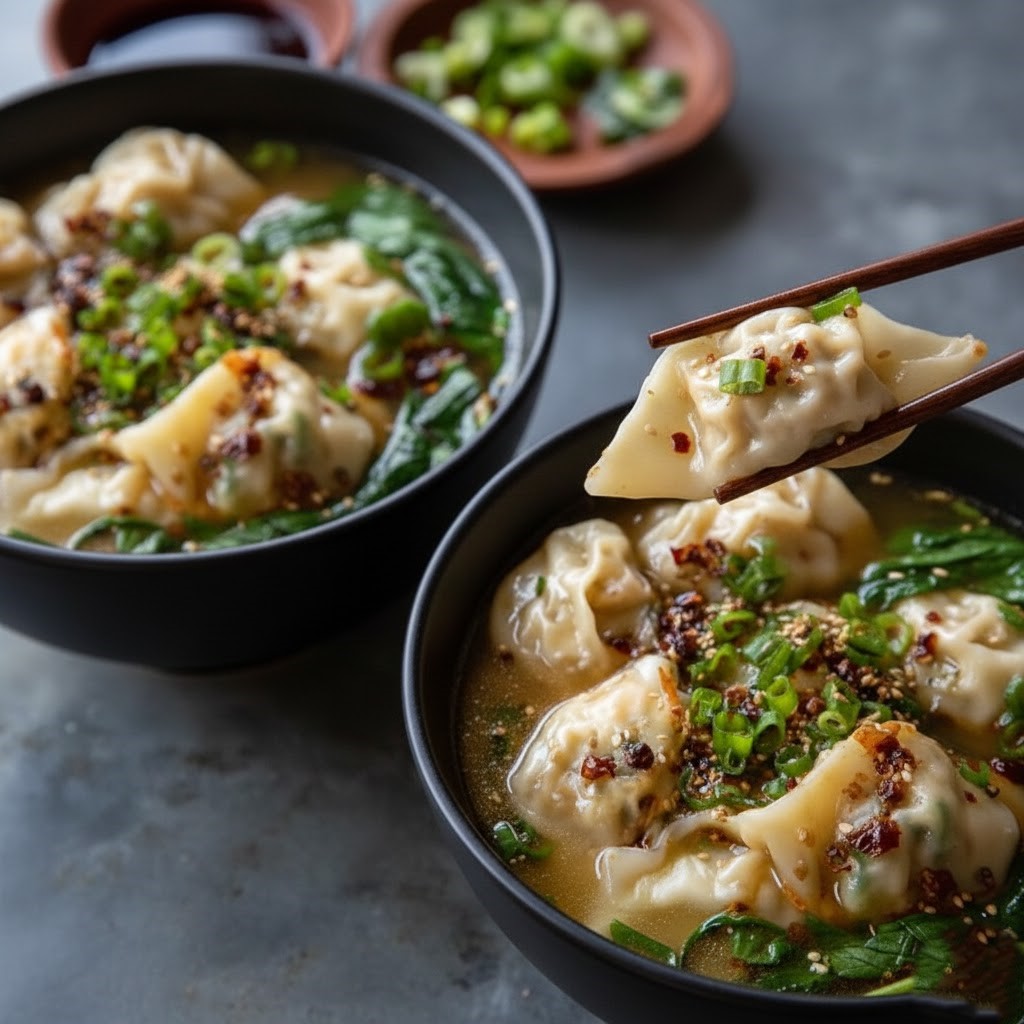
Use low-sodium broth so you have better control over seasoning. You can always add more salt, but you can’t take it away.
Mix the filling gently to keep the wontons tender. Overmixing can make the meat dense and chewy.
Seal the wontons properly to prevent them from opening while cooking. Even a small gap can cause filling to leak into the broth.
Cook wontons at a gentle simmer rather than a rolling boil. This helps them keep their shape and texture.
Taste the broth before serving and adjust seasoning slowly. Small adjustments make a big difference in flavor balance.
If the broth tastes flat, a few drops of sesame oil or soy sauce can help. Always add these sparingly.
Variations of Wonton Soup Recipe
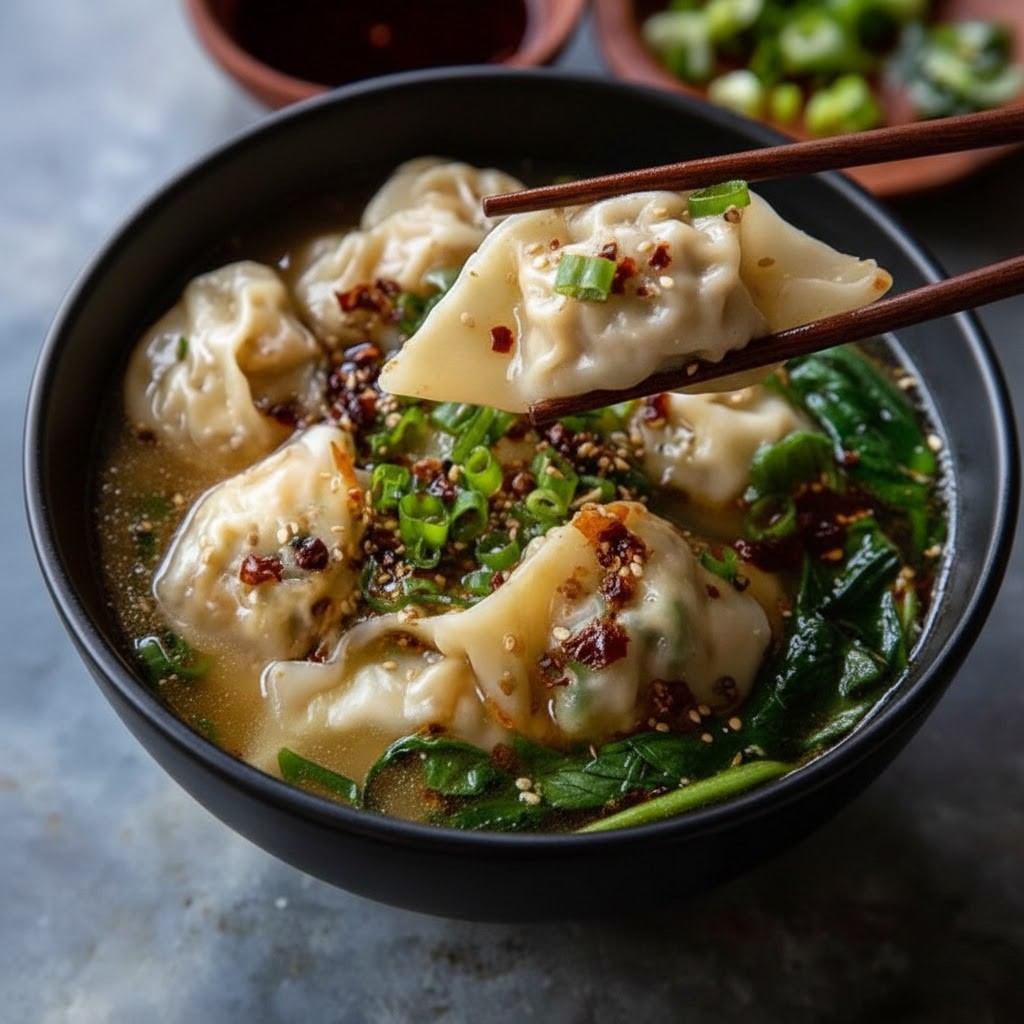
You can change the protein in the filling based on preference. Shrimp, turkey, or a mix of chicken and shrimp works well.
For a vegetarian version, use finely chopped mushrooms and tofu. Season them well to maintain depth of flavor.
Spice lovers can add chili oil or crushed red pepper to the broth. This adds heat without overpowering the soup.
You can also add noodles to make the soup more filling. Thin egg noodles work especially well with wontons.
Vegetable choices can be adjusted easily. Napa cabbage, mushrooms, or baby corn are great additions.
A darker broth can be made by adding a splash of oyster sauce. This gives the soup a richer and deeper flavor.
Storage Instructions
Leftover wonton soup should be stored carefully to maintain quality. Separate the broth from the wontons if possible.
Store cooked wontons in an airtight container in the refrigerator. They stay good for up to two days.
The broth can be stored separately for up to four days. Keep it tightly sealed to prevent odor absorption.
If stored together, the wontons may soften over time. This is normal but affects texture.
Never store soup at room temperature for long periods. Always refrigerate once it has cooled slightly.
Frozen uncooked wontons can be stored for up to two months. This makes future meals quick and convenient.
Can We Reheat Wonton Soup?
Wonton soup can be reheated gently for best results. Avoid high heat to prevent overcooking the wontons.
Reheat the broth separately if possible. Bring it to a gentle simmer before adding wontons.
If reheating everything together, use low heat and stir gently. This helps maintain the shape of the wontons.
Microwaving is possible but should be done carefully. Heat in short intervals and stir between rounds.
Add a small splash of water or broth if the soup thickens. This helps restore the original consistency.
Always check the temperature before serving. The soup should be hot throughout, not just warm.
Recipe FAQs
Can I use store-bought wontons for this soup? Yes, store-bought wontons work well and save time when needed.
What meat is best for wonton filling? Chicken and pork are most common, but shrimp is also popular.
Why are my wontons falling apart? This usually happens due to poor sealing or overboiling.
Can I make the soup gluten-free? You can use gluten-free wrappers and tamari instead of soy sauce.
Is wonton soup healthy? It is generally light and balanced, especially when made at home.
Can I add more vegetables? Yes, adding vegetables boosts nutrition and texture.
How do I know when wontons are cooked? They float to the surface and look slightly translucent.
Can I freeze cooked wonton soup? It’s better to freeze uncooked wontons and broth separately.
Conclusion
Wonton soup is a comforting dish that feels both simple and special. Making it at home allows you to control flavor, texture, and ingredients.
I enjoy how calming the process feels, from folding the wontons to tasting the final broth. It’s a recipe that rewards patience and care.
This soup fits many moments, from quiet dinners to light family meals. It’s gentle, warming, and always satisfying.
Once you make it yourself, it becomes more than just a recipe. It turns into a comfort meal you’ll return to again and again.